Austria’s textile and clothing sector continues to play an important role in manufacturing, with recognised strengths in technical textiles, medical applications, PPE, functional materials, workwear and specialised high-quality production. However, the industry is facing growing pressures from global competition, rising production and energy costs, climate change, digitalisation and labour shortages.
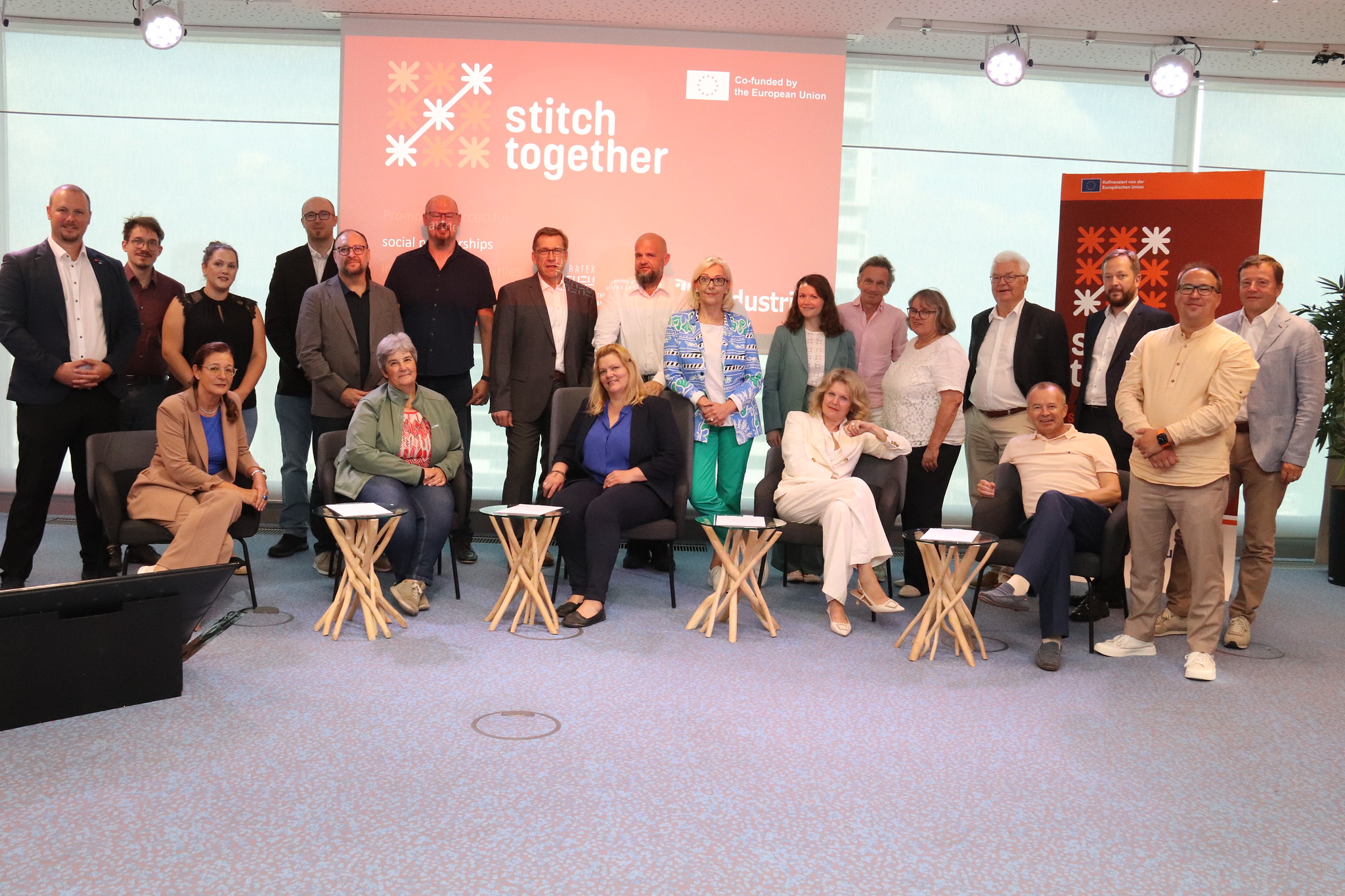
With these challenges in mind, the Stitch Together seventh seminar provided the ideal opportunity for employers and trade unions to discuss how to overcome these hurdles, and identify common priorities for managing the sector’s transformation.
Thus, employers’ and trade union’s representatives adopted the Vienna declaration, reaffirming their shared commitment to supporting a competitive, sustainable, innovative and socially responsible industry through strong social dialogue and collective bargaining.
The Austrian declaration highlights six key areas of joint commitment:
- Strong social dialogue and collective bargaining remain essential pillars of the country’s social partnership model and key tools for managing the green and digital transitions;
- A just transition and industrial competitiveness must go hand in hand, ensuring that policies supporting industry also protect quality employment and regional production;
- A fair green and circular transition requires adequate public investment to help companies and workers adapt to sustainable and digital production models;
- Skills, lifelong learning and vocational training are crucial for addressing future workforce needs linked to digitalisation, automation, artificial intelligence and sustainability;
- Quality employment and sector attractiveness are necessary to attract young people, skilled workers, women, migrants and other underrepresented groups into the industry;
- Decent work, fair wages and workers’ rights must continue to be safeguarded through effective collective bargaining and social dialogue.
Looking ahead, the Austrian social partners stressed the importance of creating a level playing field that supports sustainable manufacturing, industrial innovation and local production. They emphasised that strong labour standards, investment in people and effective social dialogue will be essential to ensuring the long-term success of the green and digital transitions.
Through the Vienna declaration, employers and trade unions have sent a clear message: the future of the textile and clothing industry must combine competitiveness, sustainability and social responsibility, ensuring that both businesses and workers can thrive in the years ahead.
Dirk Vantyghem, Director General EURATEX: “The Austrian seminar demonstrates that strong social dialogue remains one of our sector’s greatest assets. At a time of complex green and digital transformation, employers and trade unions are showing that competitiveness and social responsibility can go hand in hand to build a resilient future for the textile and clothing industry.”
Judith Kirton-Darling, General Secretary, IndustriAll Europe: “The textile and clothing industry is undergoing profound change, and workers must be at the heart of this transformation. The Vienna declaration shows that employers and trade unions can work together to ensure that the green and digital transitions deliver quality jobs, stronger skills and a sustainable future for the sector. Social dialogue and collective bargaining will remain essential to making this transition fair for all.”
Read the entire joint statement HERE.