FACTS and KEY FIGURES
The textile and clothing industry in 2026
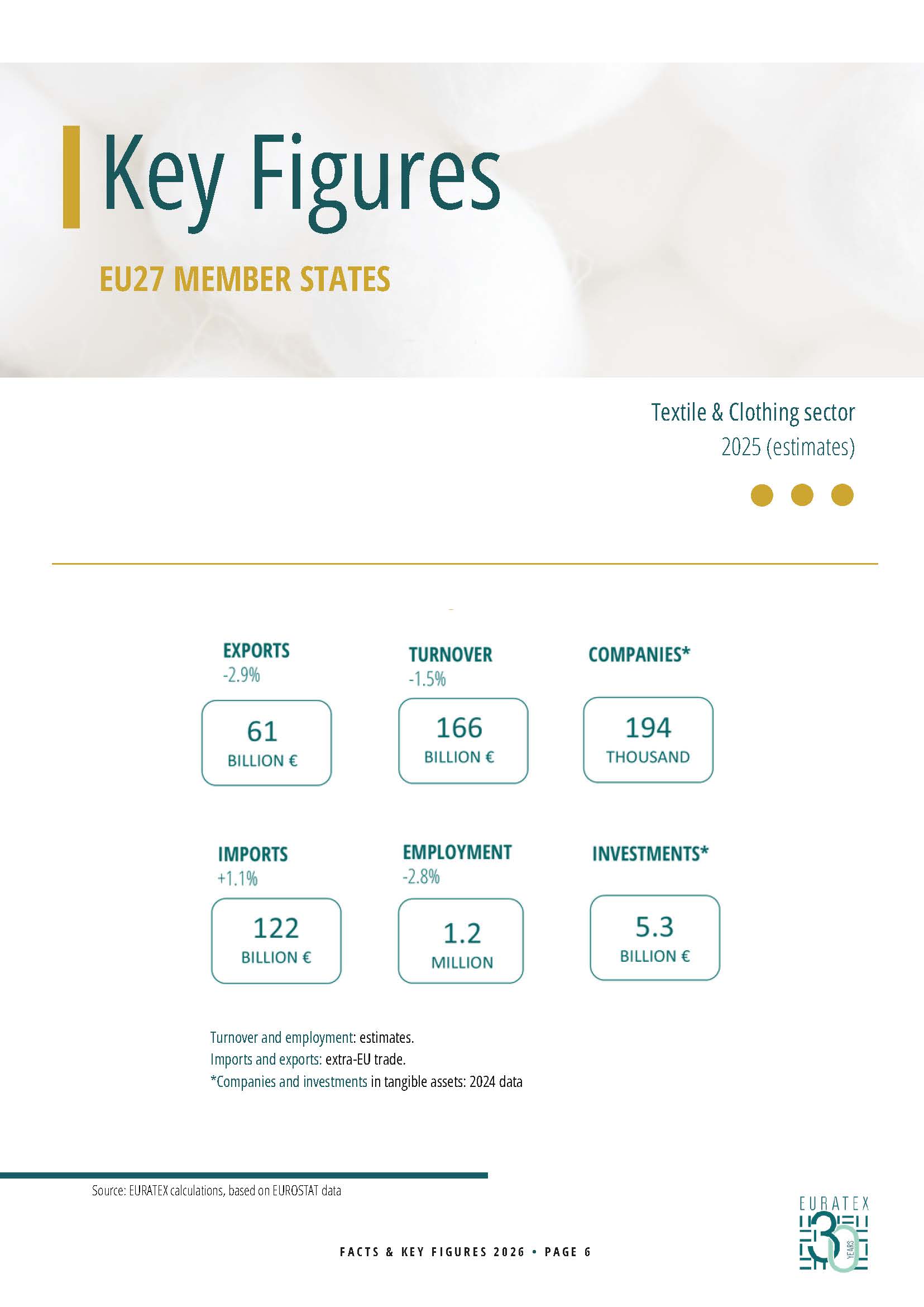
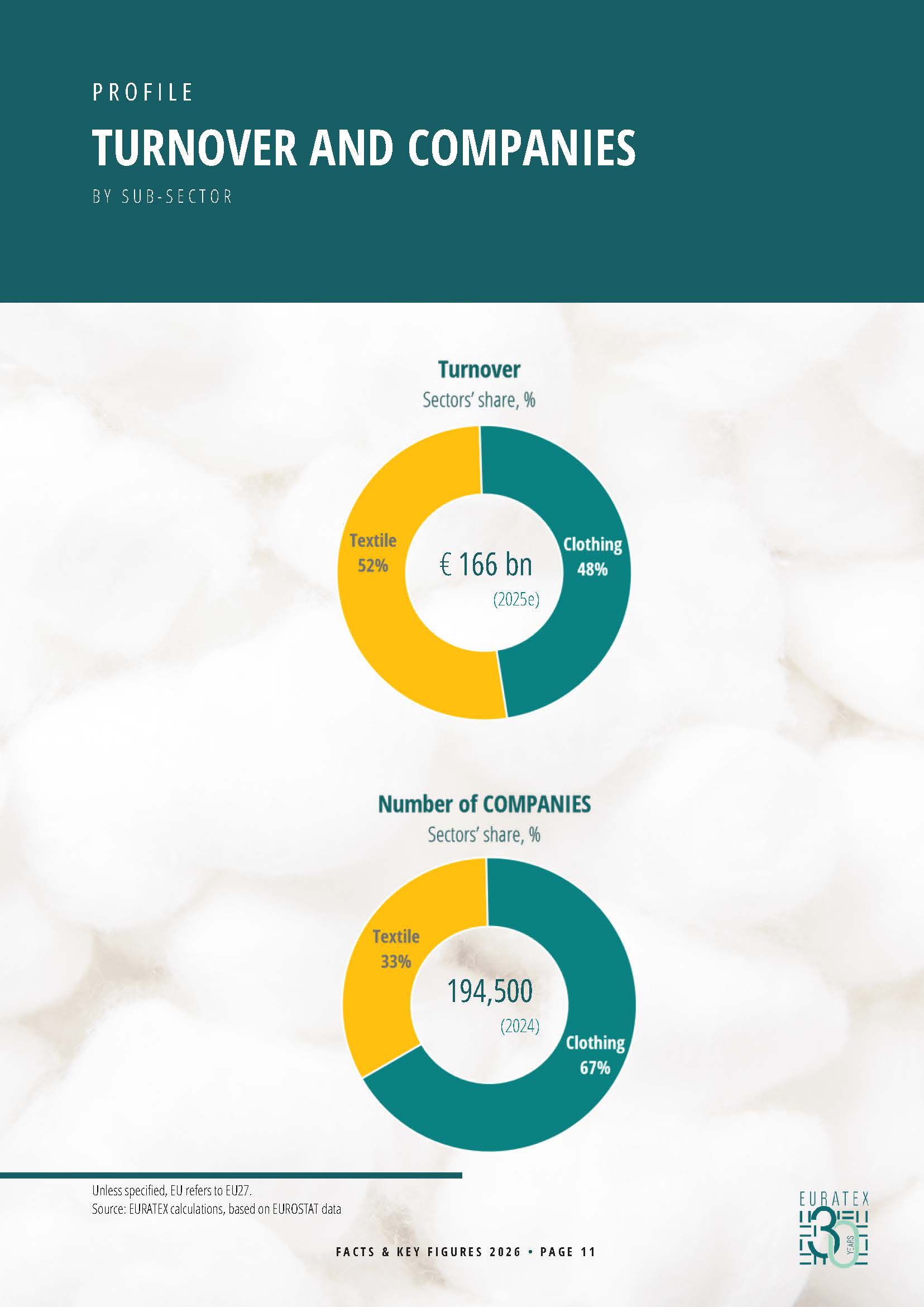
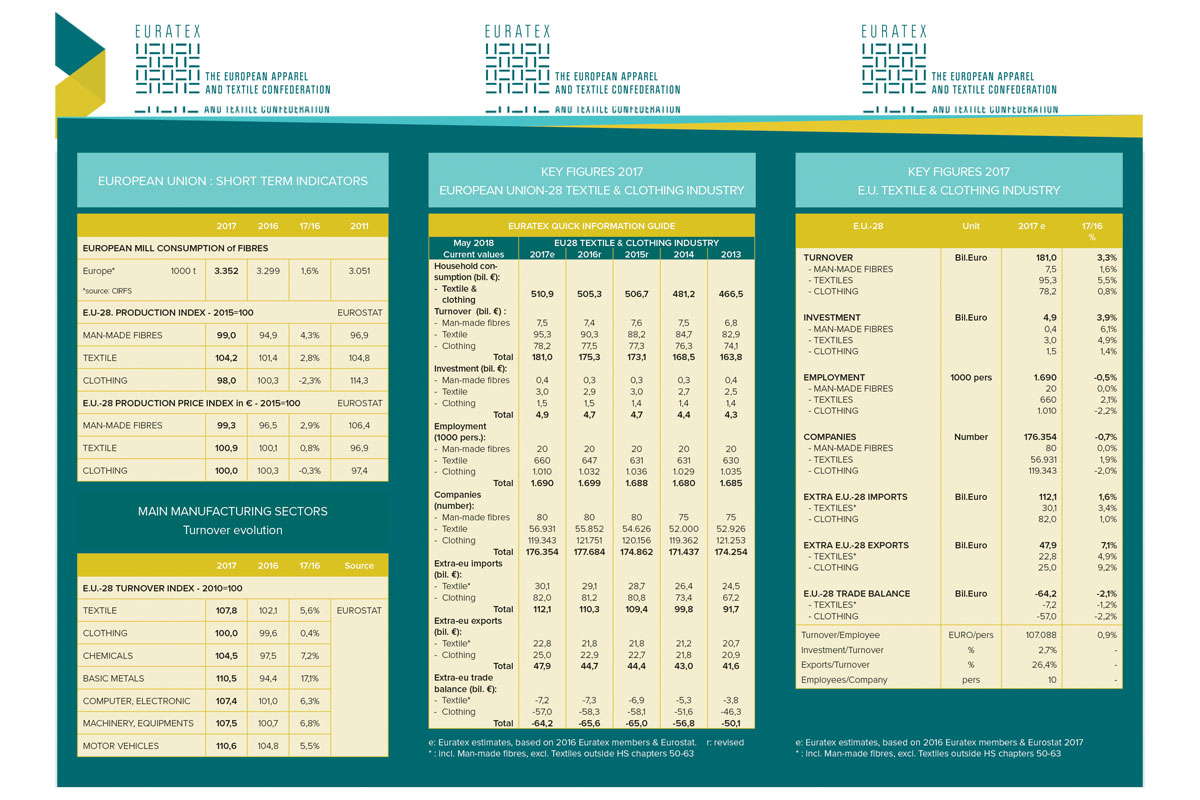
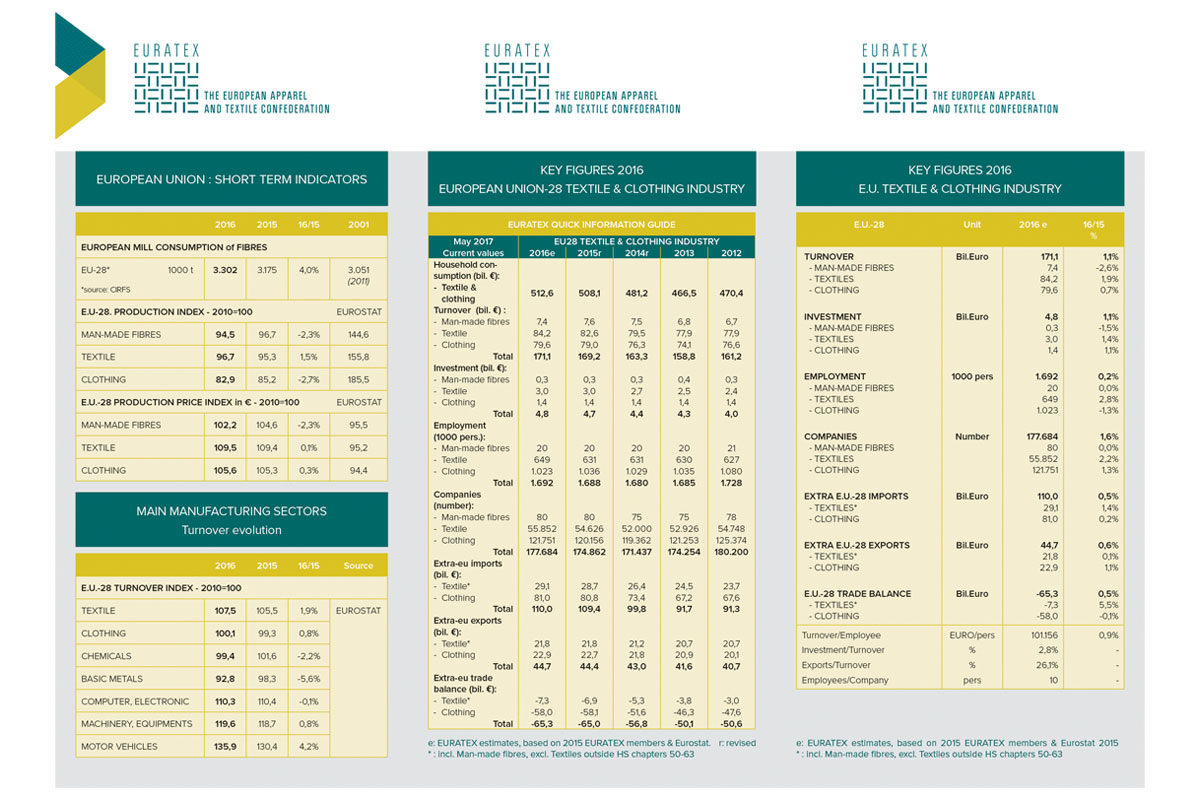
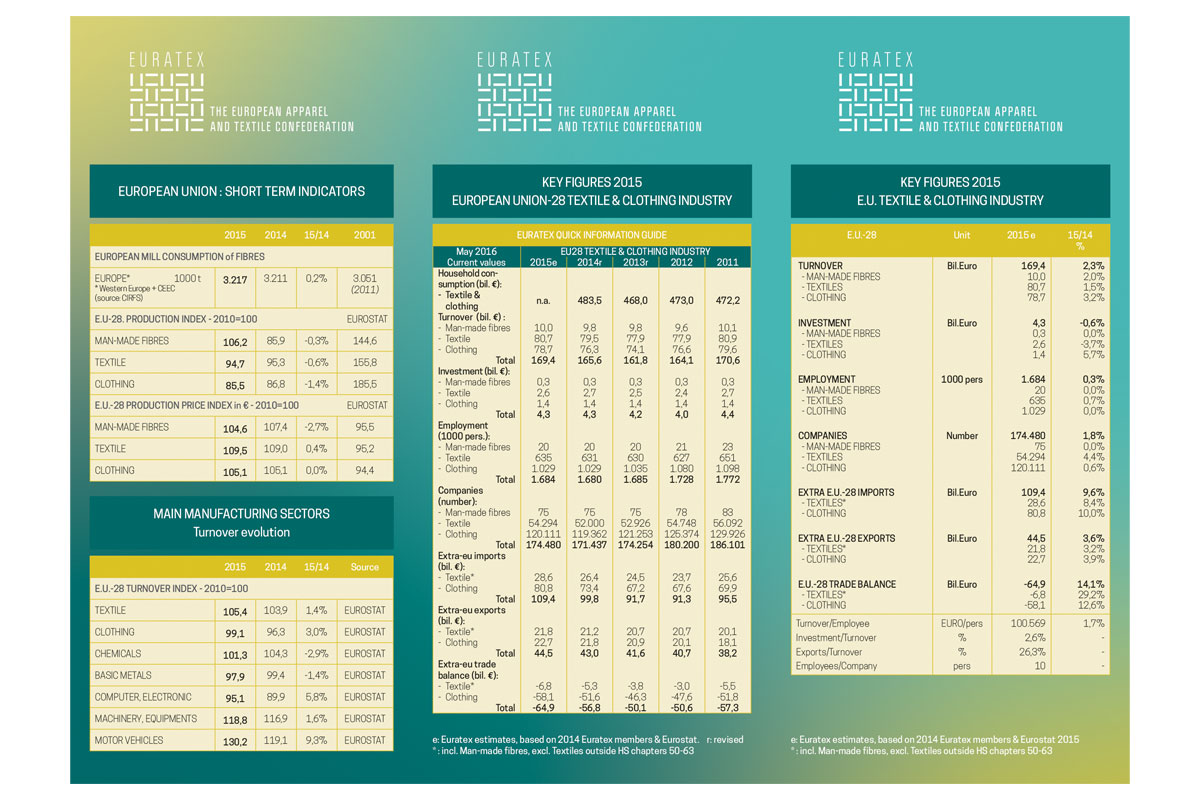
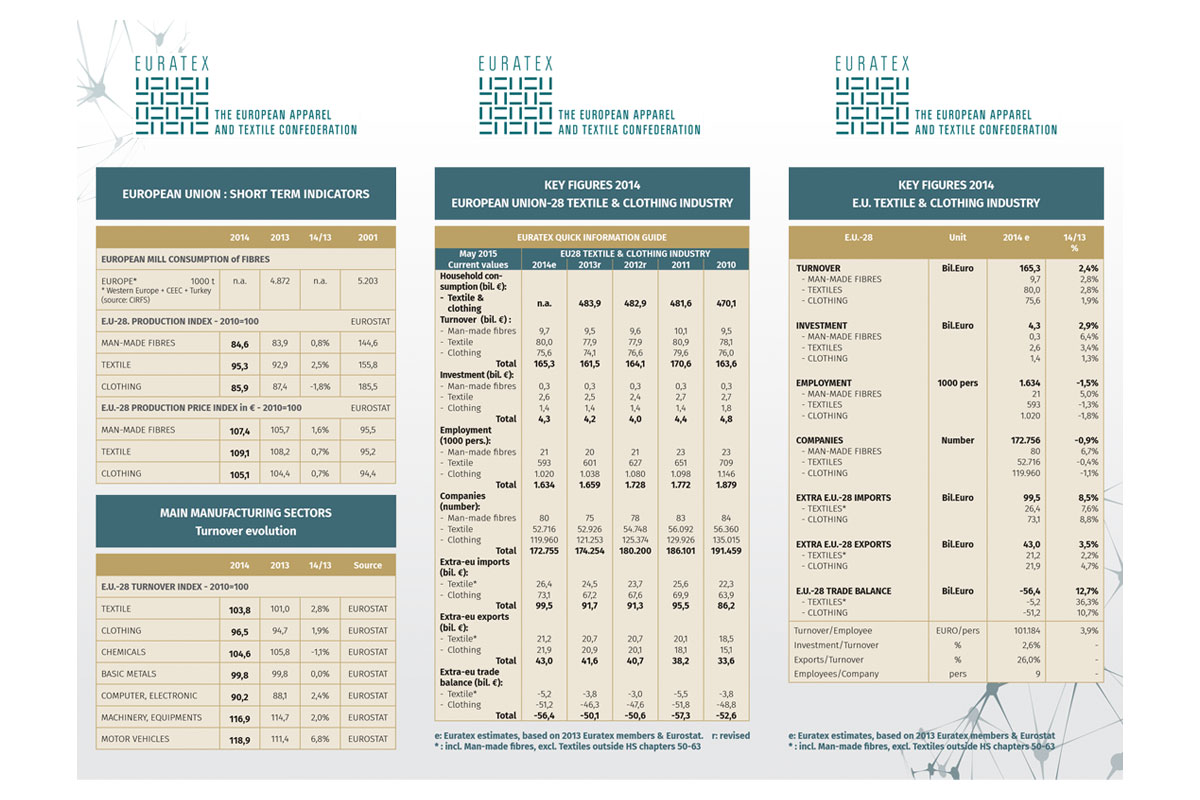
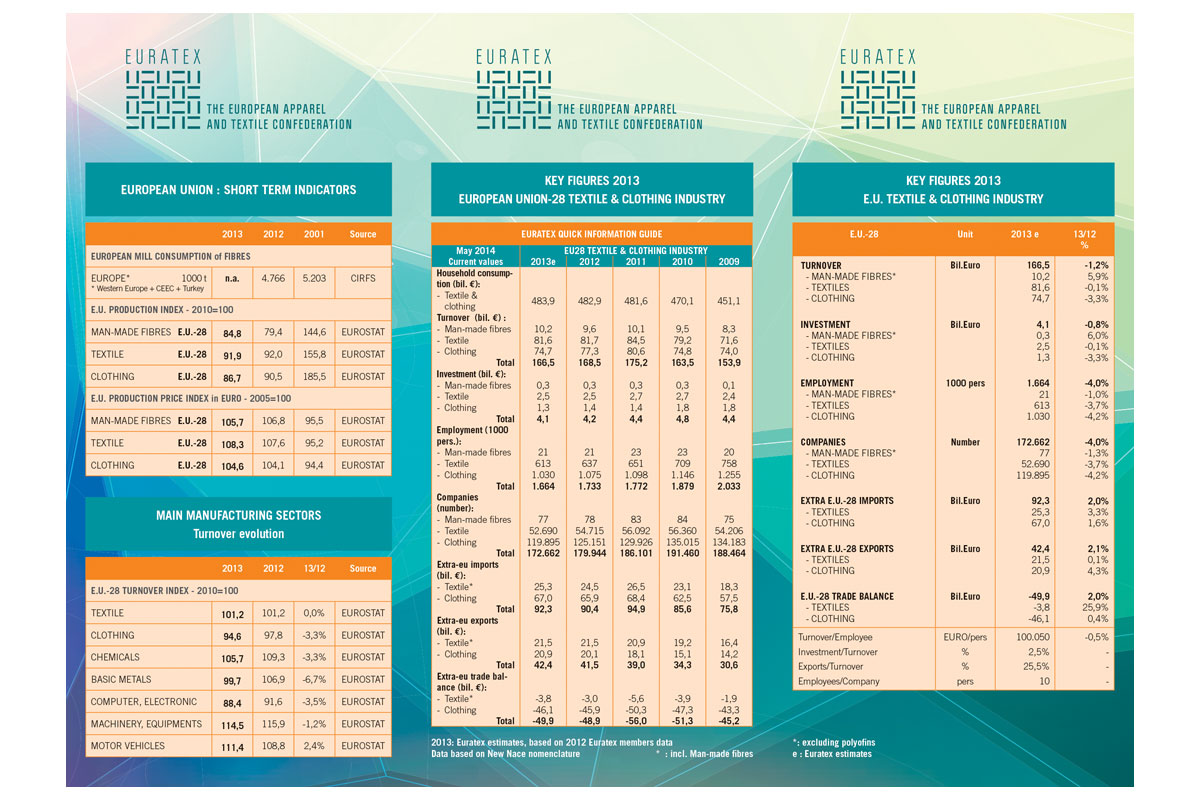
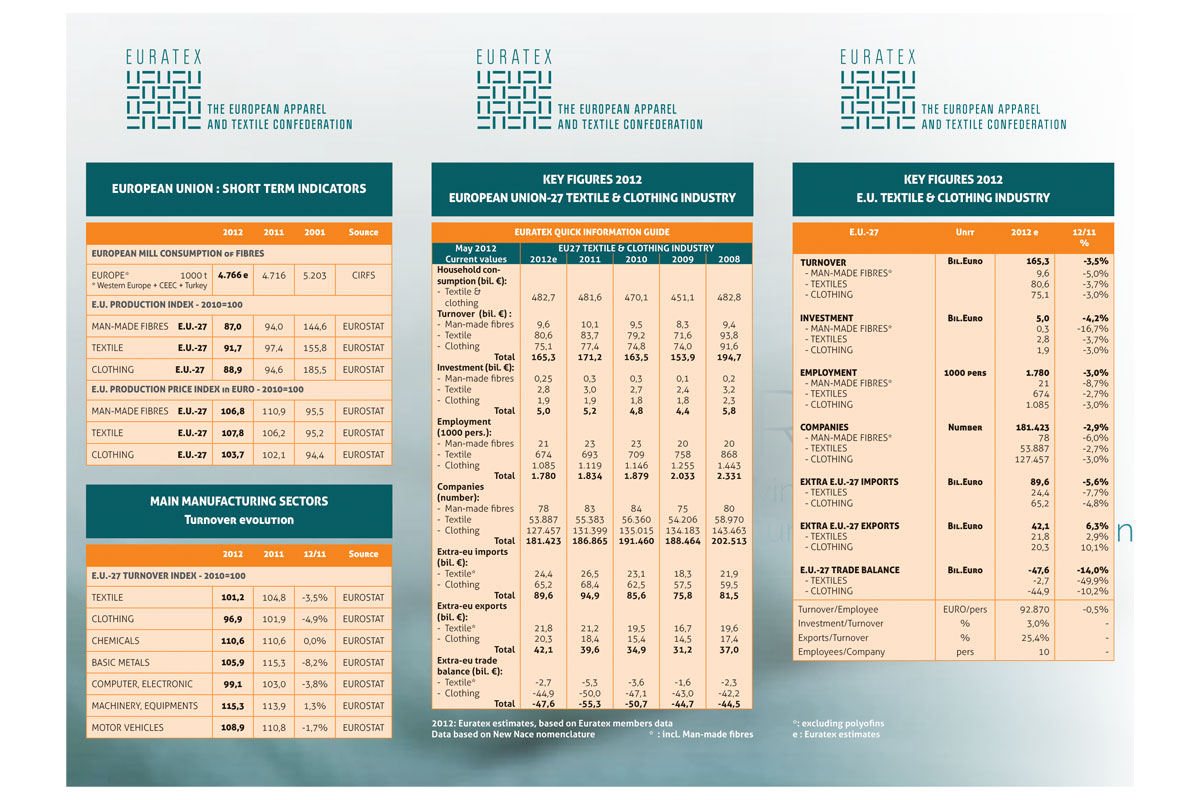
The European textile and clothing industry stands at a defining moment. With €166 billion in annual turnover, 1.2 million jobs and nearly 200,000 companies across the EU-27, the sector remains one of Europe’s key industrial ecosystems, supporting innovation, employment and strategic value far beyond fashion, including transport, healthcare, construction, agriculture and defence.
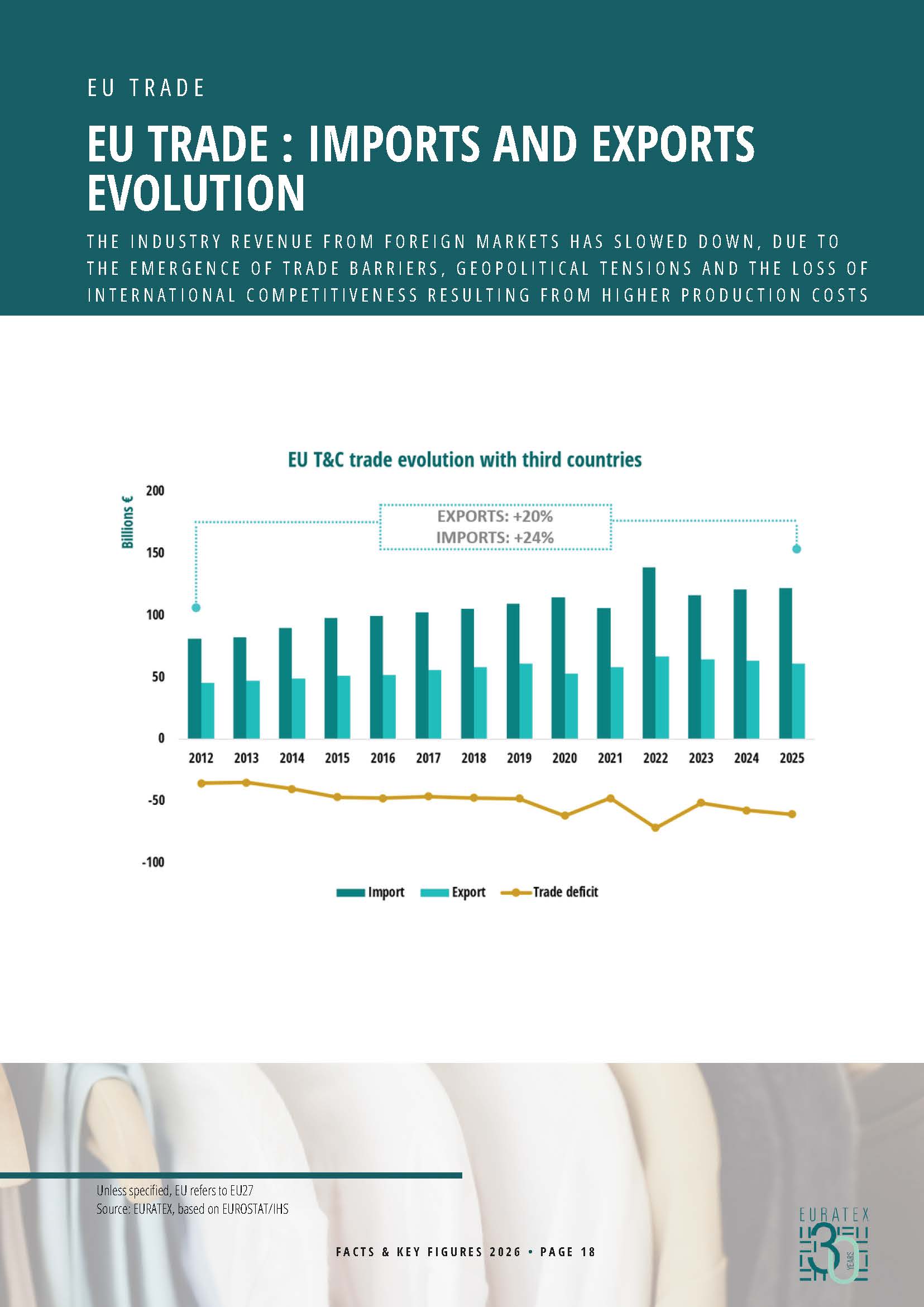
The 2026 edition of EURATEX Facts & Figures shows a more complex reality. Exports declined by 2.9%, employment fell by 2.8%, and the trade deficit with third countries continues to widen. Imports now stand at €122 billion, more than double the €61 billion in exports, while around one third of textile and clothing products sold in Europe are manufactured in China.
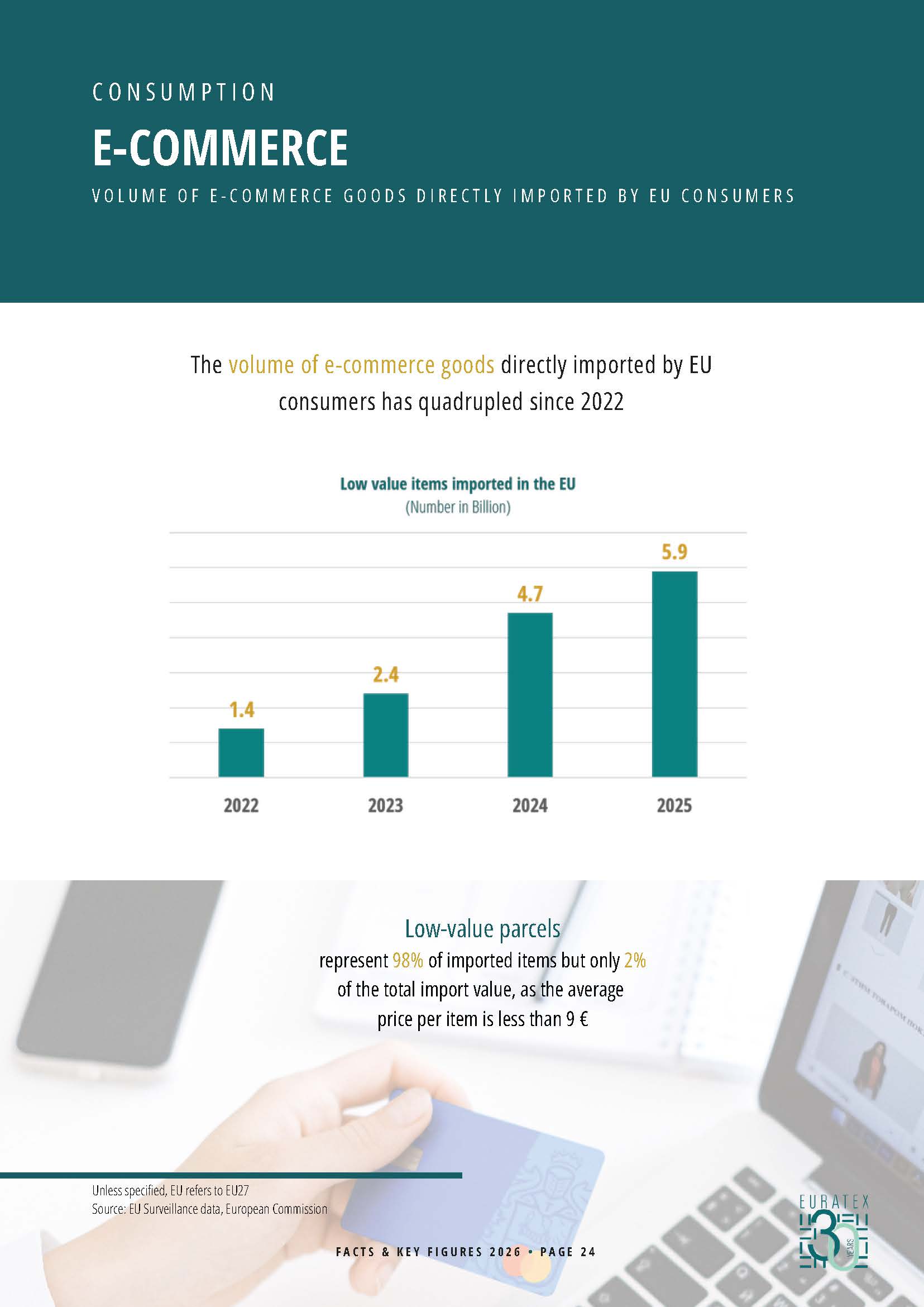
E-commerce is adding further pressure. Since 2022, volumes of low-value parcels have quadrupled, with average import prices below €9 per item. This creates an uneven playing field for European producers that comply with high environmental, social and product standards.
At the same time, the report highlights the sector’s resilience and capacity to reinvent itself. Productivity has continued to improve, while CO₂ emission intensity has fallen sharply, from above 160 grams per euro of value added in 2008 to 66 grams in 2024. This shows that competitiveness and sustainability can progress together.
From technical textiles and advanced materials to circular solutions and high-value manufacturing, Europe’s textile and clothing industry continues to evolve. The challenge now is to create the conditions for companies to remain competitive, invest in Europe and lead the transition towards a more sustainable and resilient industrial future.