
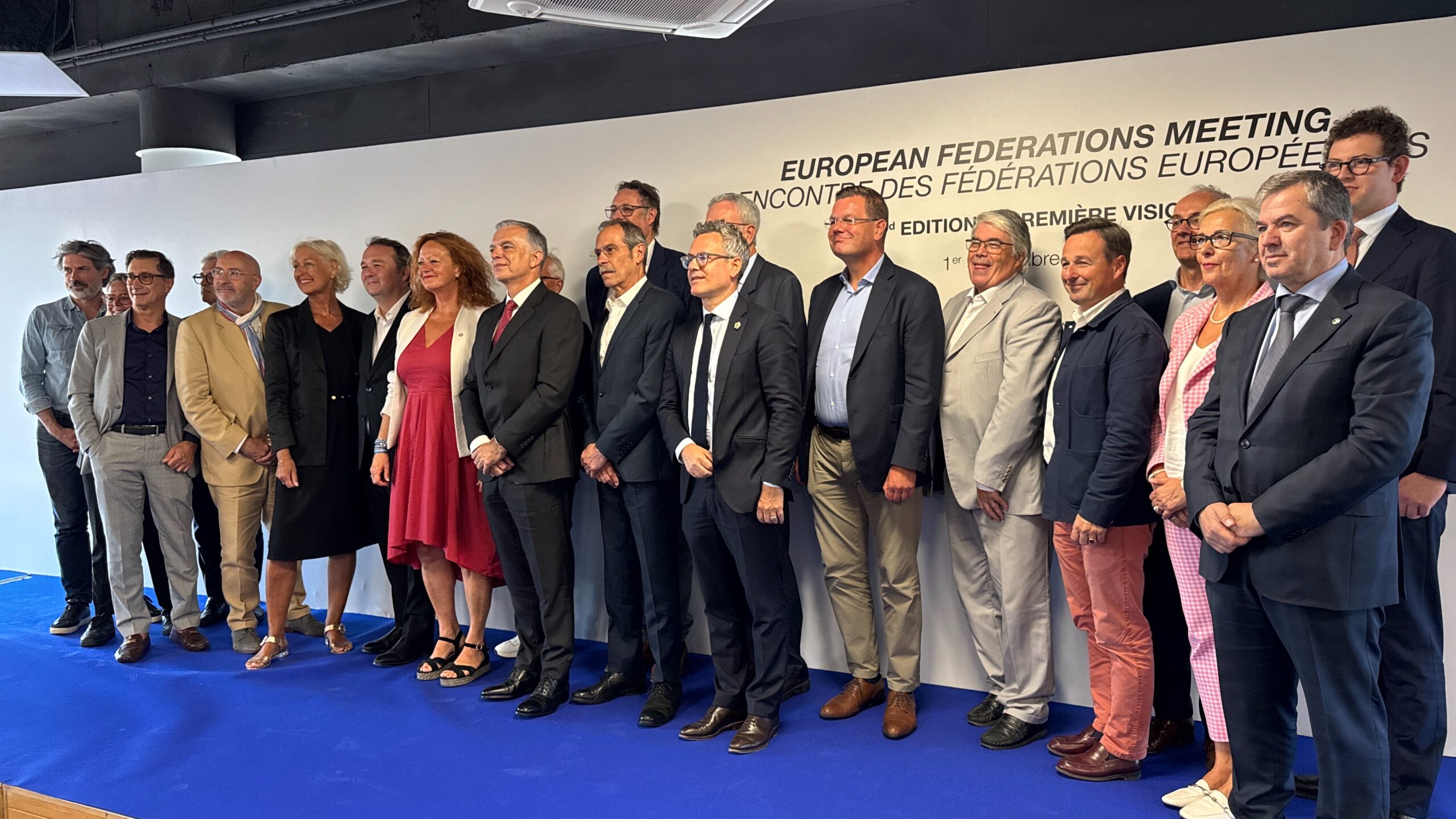
Paris, 01/09/2026 – The introduction of the €3 customs duty on low-value imports marks an important milestone in Europe’s efforts to address the challenges created by the rapid growth of ultra-fast-fashion imports. Together with the abolition of the €150 customs duty exemption, it demonstrates that policymakers are willing to act when market distortions become impossible to ignore. But this should be seen as a first step, not the final destination.
Today, at Premiere Vision, the European textile and apparel industry reinforced the belief the European Union must now introduce a meaningful handling fee that reflects the real costs generated by billions of direct-to-consumer parcels entering the Single Market every year. A fee in the region of €10 per parcel provides a more realistic indication of the scale required to support effective enforcement.
Every parcel entering the EU generates costs. Customs authorities must process declarations, conduct risk assessments and verify compliance. Market surveillance authorities need resources to identify unsafe and non-compliant goods. Product safety checks, logistics handling and enforcement activities all carry a price. Today, a significant portion of these costs is borne by taxpayers and by European companies that already comply with the rules.
This is why the debate should not focus solely on trade or taxation. The issue is enforcement. A handling fee should be designed to ensure that those generating these costs contribute to covering them. For that reason, the revenues should be directly linked to strengthening customs controls, market surveillance, product safety enforcement and risk-analysis capabilities across the European Union.
The levels currently being discussed, generally between €2 and €4 per parcel, are unlikely to make a meaningful contribution to the actual costs of managing these flows. A €10 benchmark better reflects the scale of the challenge while remaining proportionate and connected to genuine enforcement needs. The precise amount should ultimately be based on a robust assessment of the costs incurred by public authorities.
At the same time, Europe must ensure that online platforms take greater responsibility for the products they place on the European market. We support the accelerated implementation of the Deemed Importer approach and greater coherence between customs, product safety, market surveillance and digital legislation.
We also need to avoid creating new loopholes. Stronger controls on individual parcels should not simply encourage operators to switch to bulk imports, European warehouses or fulfilment centres. Effective oversight must apply regardless of the logistics model used. Customs authorities need access to equivalent and detailed data for both B2C and B2B flows if they are to enforce EU rules effectively.
Europe’s textile and apparel industry represents 1.3 million jobs and 200,000 companies, most of them SMEs. These businesses operate under some of the world’s most demanding social, environmental and product-safety standards. They deserve a level playing field where all companies selling to European consumers are identifiable, accountable and subject to effective controls.
Read more in the joint statement, signed today at Premiere Vision, one year after the adoption of the Villepinte Declaration against Ultra-Fast Fashion.